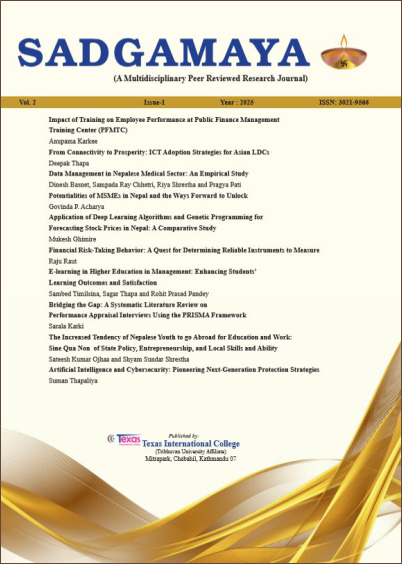
Artificial Intelligence and Cybersecurity: Pioneering Next-Generation Protection Strategies
Keywords:
artificial intelligence (AI), cybersecurity, threat detection, data security, data privacyAbstract
Background: AI's role in cybersecurity is pivotal because it can analyze vast datasets, detect anomalies, and automate threat responses. It enables proactive threat mitigation, enhances incident response times, and fortifies resilience against sophisticated cyber threats. Aim: This study investigates AI's multifaceted impact on cybersecurity, examining applications in threat detection, incident response automation, and vulnerability management. Methodology: The paper synthesizes literature and research on AI in cybersecurity, reviewing expert systems, machine learning, deep learning, and data mining techniques used in cyber defense. It also analyzes AI's role in enhancing cybersecurity resilience and discusses ethical considerations and risks. Results: AI integration in cybersecurity has significantly improved threat detection accuracy, reduced incident response times, and increased operational efficiency. Machine learning algorithms have shown promise in detecting malware, phishing, and insider threats. Findings: Key findings suggest that while AI enhances cybersecurity capabilities, challenges like algorithmic bias, lack of transparency, and susceptibility to adversarial attacks need addressing.
Strategies such as robust input validation, ethical audits, and continuous human supervision are critical to mitigating these risks.
Downloads
Published
How to Cite
Issue
Section
License
Reproduction of this journal or any part of it without the permission of the Publisher is strictly prohibited.

