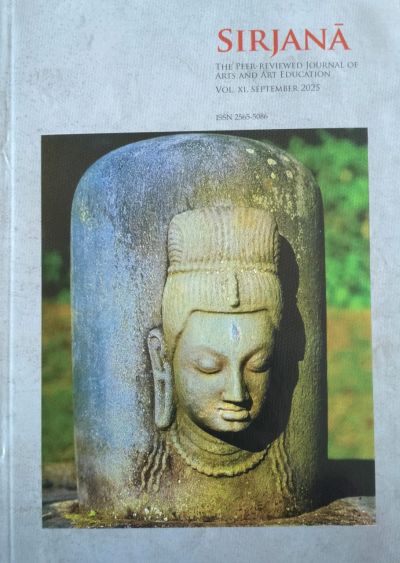
Primordial Liṅgas of Nepal: A Qualitative Analysis of Their Artistic Forms and Symbolism
Keywords:
'symbolic significance' , ártistic origins, earliest forms, symbolic significanceAbstract
This study primarily aims to examine the form and symbolic meaning of Nepal’s primordial liṅgas. A liṅga is a finest visual symbol that represents the Trimurti (trinity). The symbolic associations with the Trimurti, including the deities’ vehicles and consorts, play a significant role in the conceptualization of the liṅga. As one of the most prominent forms of Hindu art, the liṅga embodies both spiritual and artistic value. The primordial liṅgas of Nepal are predominantly rendered in three-dimensional forms, exhibiting various features such as the simple (aniconic), one-faced, four-faced, and five-faced types. Each of these forms expresses cosmic energy in distinct ways. The study finds that the diverse forms of primordial Śiva liṅgas in Nepal are deeply rooted in the cultural and artistic traditions of the Indus Valley Civilization and influenced by the Gupta style, highlighting their historical, cultural, artistic, and religious significance. This qualitative research employs observation and interpretation to examine the meaning and evolution of these sacred forms.