Archives

  • Cover JTHA

    Vol. 7 No. 1 (2025)

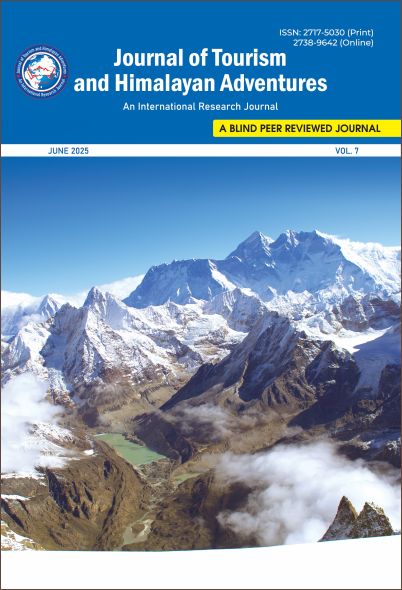
    Glory of Mera Peak Expedition This is a high-altitude panoramic image, captured from the summit ridge of Mera Peak (6,476 m) in the Solukhumbu region of Nepal on 07 June 2025, presents an exceptional view of the Mahalangur Himal Range. The composition faces northwest and features several iconic Himalayan giants rising above glacial valleys and pro-glacial lakes. Dominating the right-center skyline is Mount Everest (8,848.86 m), whose dark pyramid-shaped summit is slightly recessed. Just south of Everest is Lhotse (8,516 m), distinguishable by its massive bulk and steep south face. At the base of the valley below is the Hinku Valley, where the Sabai Tsho and Chamlang Tsho glacial lakes reside. These are pale-turquoise, sediment-laden lakes, fed by melt-water from surrounding glaciers. Their presence reflects rapid glacial retreat and increasing glacial lake outburst flood (GLOF) risk associated with climate change in the eastern Himalayas. This image thus serves as a rich geographical and environmental document, illustrating stratified altitudinal zoning, tectonic uplift, and anthropogenic transformations within one of the world’s most dynamic mountain environments. The panoramic view of the Mahalangur Himal Range from the Mera Peak region, featuring the Mount Everest, Lhotse, and the glacial lakes of the Hinku Valley—an evolving landscape shaped by tectonic uplift and glacial retreat.

  • Cover JTHA

    Vol. 6 No. 1 (2024)

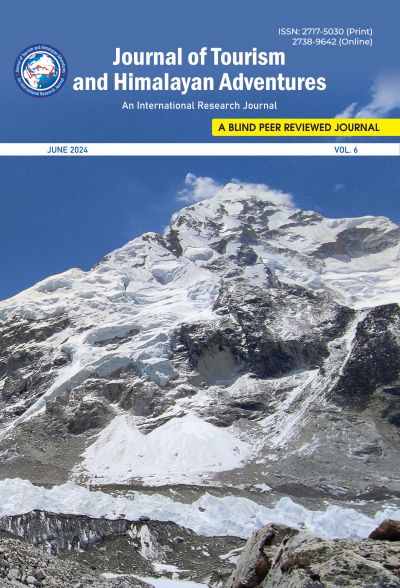
    Cover Image: A panoramic view of the core Mahalangur mountains taken from Pumori High Camp during my Everest Expedition in Spring, 2023. In the picture: Everest-Lhotse Base Camp to the bottom left residing over the Khumbu Glacier, Chhyangtse behind the Lho La (pass), West shoulder and behind it is Everest in the center, while the west face of Nuptse dominates the view to the right. Image@ Ashok Nepal

  • Vol. 4 No. 1 (2022)

    This volume has included a few articles co-authored by our bachelor and master’s students who were working with some independent scholars. The scholars were NMA’s first batch (2021) research grant recipients who had carried out their 2500 m. and above field-based studies on the topics like mountain sciences, mountaineering and trekking tourism, adventure tourism, and the Himalayan cultural heritages.
